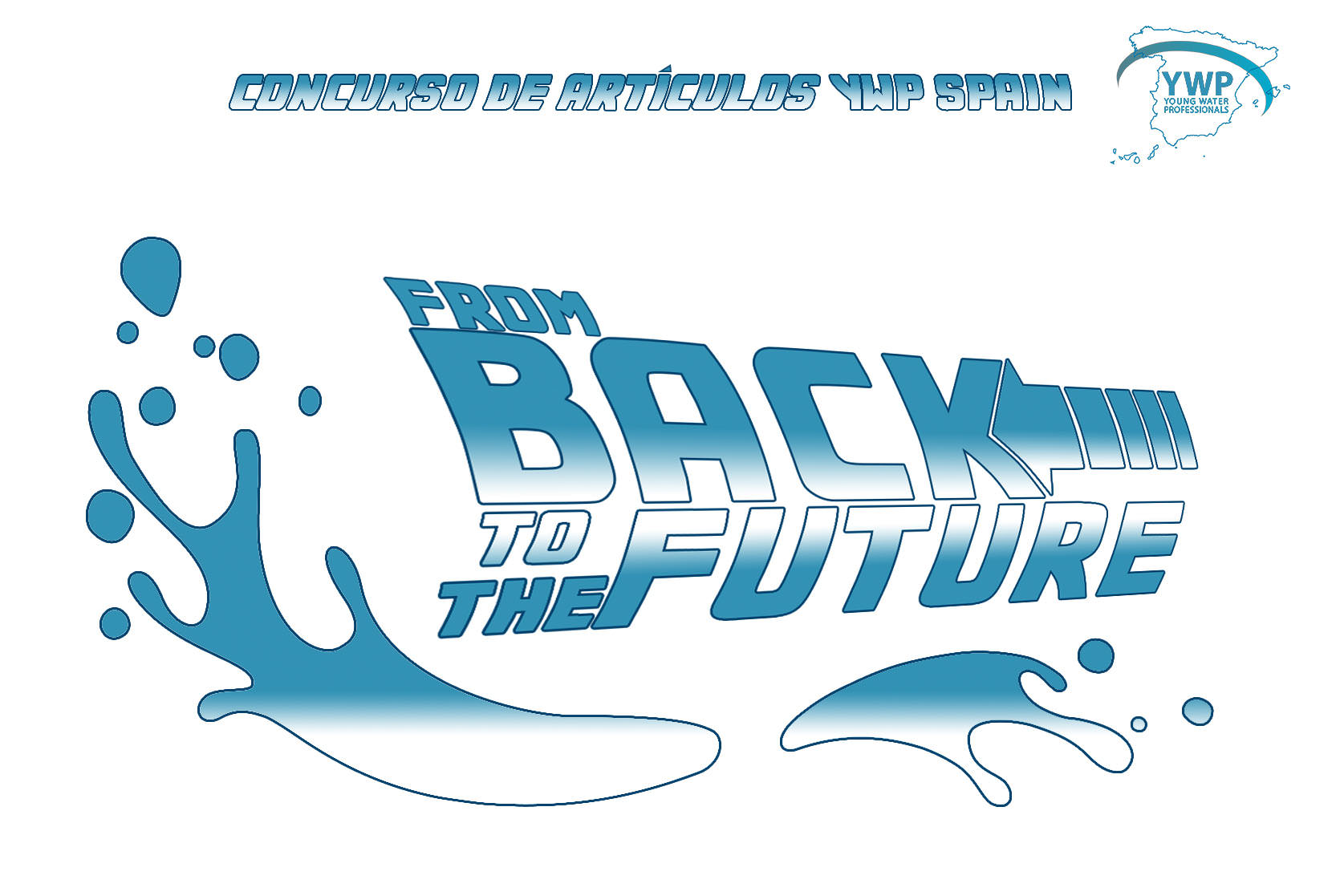
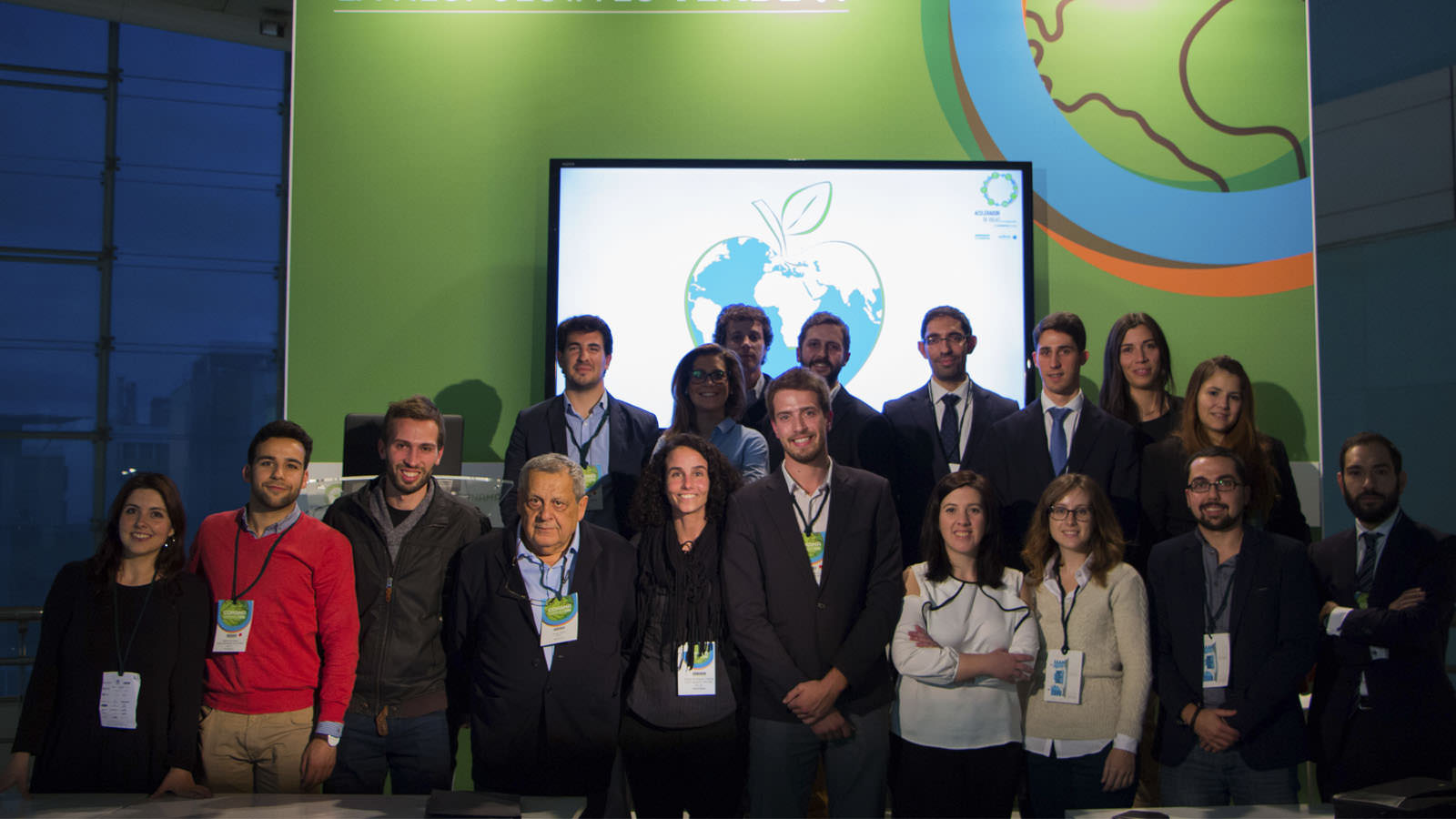
YWP Spain convoca su primer concurso de blogs, abierto a todos los participantes de la red.
El concurso será de post en primera persona, empleando personajes de ficción y a modo cuaderno de bitácora; en dichas entradas se relatará un evento o situación relacionada con el mundo del agua. La particularidad es que cada persona tiene que elegir una fecha de entre un set de fechas entre el pasado y futuro en el que el personaje ficticio viva. Cada persona sólo podrá elegir una fecha.
Habrá dos ganadores: uno escogido por un jurado y otro según las visitas que tenga en iagua.es, donde se publicarán las entradas además de la propia web de YWP Spain.
Los premios, ofrecidos por AEAS, son una cesta de Navidad (premio por visitas) y una entrada completa al congreso de AEAS en marzo (premio del jurado).
El concurso se cierra el 14 de diciembre.
¡Anímate a participar!
Consulta las bases a continuación:
Bases del I Concurso de Blogs YWP Spain: Agua, from Back to the Future
1. Objeto del concurso
YWP Spain pone en marcha un concurso de blogs de acuerdo con los términos recogidos en las presentes bases y cuyos ganadores obtendrán los premios descritos en el punto 6.
2. Aceptación de las bases
La participación en el concurso supone la aceptación plena e incondicional de estas bases. El reconocimiento como participante válido queda sujeto al cumplimiento de los requisitos establecidos en el punto número 5 de estas bases.
3. Fechas de comienzo y fin del concurso
El concurso tendrá lugar entre los días 27 de noviembre y el 14 de diciembre, ambos incluidos. El día 17 de diciembre por la tarde se comunicará oficialmente el ganador del concurso por correo electrónico y a través de las redes sociales.
4. Mecánica
Se lanzan 10 fechas iniciales con una encuesta de doodle (https://doodle.com/poll/ftdgnu3s7685gdk8) para que los participantes elijan UNA SOLA FECHA, que no puede ser la misma que la de otra persona que haya votado antes. Si hay más demanda, se podrán habilitar más fechas.
Cada participante deberá enviar un texto de mínimo 150 palabras, narrado en primera persona sobre una situación / proyecto / evento (ficticio o real) relacionado con el agua en la fecha elegida. Formato cuaderno de bitácora, en primera persona (escribe directamente el personaje).
La organización se reserva el derecho de no publicación de aquellas entradas que no se ajusten al tema propuesto. El texto debe ser original, nunca réplica de otras publicaciones.
Podrán participar en el concurso todos los miembros de YWP Spain.
Se considerarán válidas las entradas de blog recibidas entre los días 27/11/2018 y 14/12/2018.
Los textos se enviarán en formato Word editable al correo info@ywp-spain.org, acompañadas de una imagen (o varias) en formato horizontal, libre de derechos y en buena calidad. Las entradas de blog se publicarán en la web de ywp (http://www.ywp-spain.es) y en iagua.es.
Habrá dos ganadores: uno elegido por un jurado designado por el Steering Committee, que evaluará los artículos en base a criterios fijados por el mismo comité, y otro según las visitas obtenidas en la web de iagua.es. en el momento de cierre del concurso.
5. Requisitos de participación
Los participantes tendrán que cumplir los siguientes requisitos:
• Ser mayor de edad.
• Pertenecer a la red YWP Spain.
6. Premio del concurso
El premio para la entrada de blog escogida por el jurado será de una entrada al congreso de AEAS, que incluye actos sociales (café, comidas y cenas) y alojamiento. Más información aquí.
El premio para la entrada de blog más leída según los datos ofrecidos por iAgua.es al momento del cierre del concurso será una cesta de Navidad.
7. Comunicación y promoción del concurso
El concurso se publicará en la web de YWP Spain y en sus diferentes cuentas en redes sociales.
8. Comunicación con los participantes
La comunicación con los participantes se realizará mediante correo electrónico a través de la dirección info@ywp-spain.org.
9. Publicación del ganador
El ganador se publicará en las redes sociales de YWP Spain el 17 de diciembre de 2018.
YWP Spain utilizará los datos facilitados por el concursante para ponerse en contacto con el ganador. La imposibilidad de contactar con el ganador por falta de datos conllevará la eliminación del concursante.
10. Derechos de autor
Los derechos de autor de los textos e imágenes presentadas serán propiedad del concursante o tendrán licencia creative commons. En el primer caso y al participar en el concurso, el concursante autoriza a YWP Spain a utilizarla/s sin requerir más permisos escritos y con el único fin que los recogidos en estas bases.
Estas condiciones se rigen por la Ley Española, y los participantes de los concursos se someten, renunciando expresamente a cualquier otro fuero, a los juzgados y tribunales de la ciudad de Madrid para cualquier disputa que pudiera surgir entre ambas partes.
Los ganadores renuncian a reclamar cualquier tipo de remuneración o contraprestación a la organización por el uso del texto, comentarios e imágenes, siempre y cuando se utilicen para la difusión y promoción de este concurso.
11. Cancelación del concurso
YWP Spain se reserva el derecho de anulación del concurso sin previo aviso siempre que dicha anulación se produzca por causas ajenas a nuestra voluntad.
En Madrid, a 27 de noviembre de 2018
Responsable:
Identidad: YOUNG WATER PROFESSIONALS SPAIN Dirección postal: SOR ANGELA DE LA CRUZ, 2 13, MADRID, 28020, MADRID – Teléfono: 91 449 09 10 Correo electrónico: info@ywp-spain.org En nombre de YOUNG WATER PROFESSIONALS SPAIN tratamos la información que nos facilita, que se conservará mientras se mantenga la relación comercial o durante los años necesarios para cumplir con las obligaciones legales. Los datos no se cederán a terceros salvo en los casos en que exista una obligación legal. Usted tiene derecho a obtener confirmación sobre si en YOUNG WATER PROFESSIONALS SPAIN estamos tratando sus datos personales por tanto tiene derecho a acceder a sus datos personales, rectificar los datos inexactos o solicitar su supresión cuando los datos ya no sean necesarios.
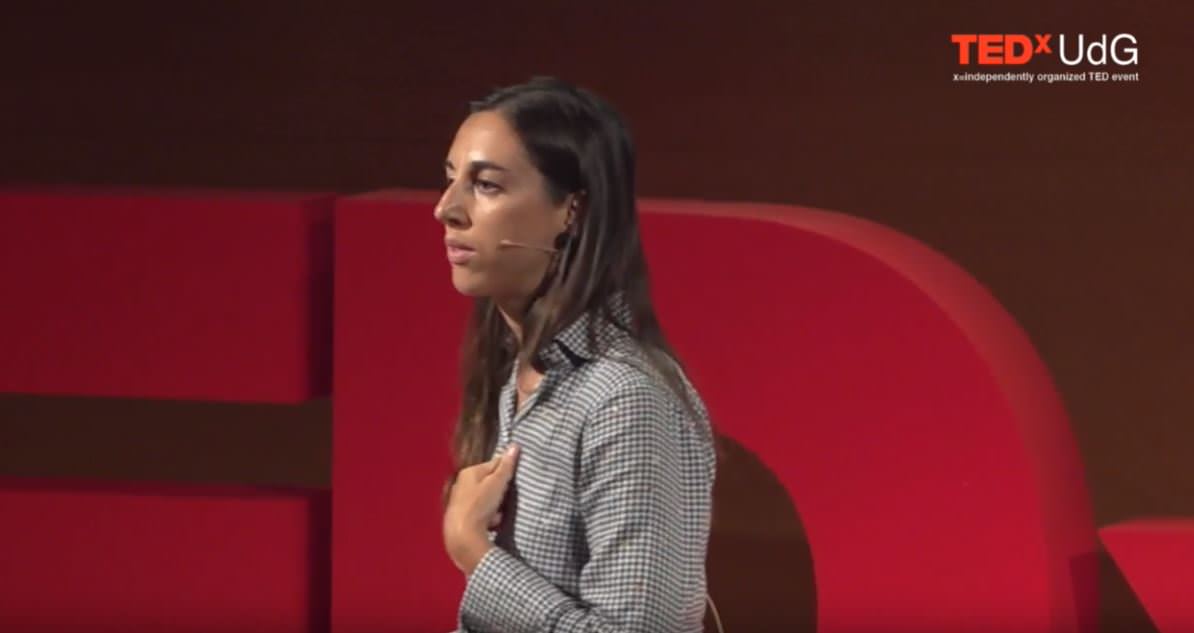
El pasado 5 de octubre, la Presidenta de YWP Spain Marina Arnaldos impartió una charla TEDx en la Universidad de Girona, titulada «Challenge accepted: How will the young water professionals change the water sector in the near future» (o «¡Desafío aceptado! Cómo los YWP revolucionarán el sector del agua en los próximos años», en español).
La temática elegida fue cómo la red de Young Water Professionals está cambiando y cambiará el sector del agua.
Centrada en los puntos fuertes que han hecho de los YWP un grupo excepcional y que Marina Arnaldos ha identificado con extraordinario acierto, la charla se puede ver al completo en este vídeo a continuación:
El pasado 12 de Julio tuvo lugar el webinar “La Huella Hídrica como herramienta de gestión”, dentro del ciclo de webinars organizado por el capítulo español de los Young Water Professionals (YWP), e impartido por Álex Fernández, director regional en España de Good Stuff International y César Zapata, ingeniero técnico Responsable de Estaciones depuradoras de aguas residuales en Acciona.
Esto fue lo que contaron.
La Huella Hídrica es un concepto que refleja el grado de apropiación humana de agua dulce, teniendo en cuenta el lugar y el momento en el que esto sucede. Se refiere al volumen de agua dulce utilizada para producir un bien o servicio de manera directa e indirecta, a lo largo de su cadena de valor.
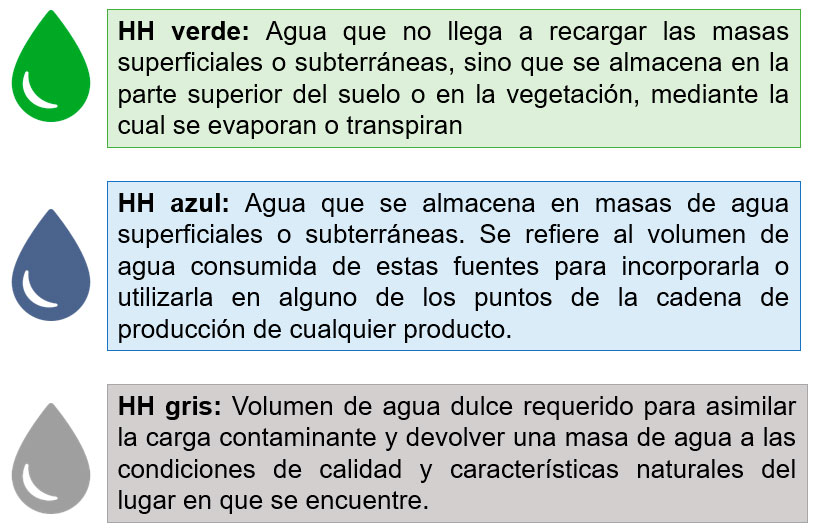
La Huella Hídrica se contabiliza mediante las Huellas Hídricas verde y azul (referidas al consumo) y gris (referida a la contaminación).
Muchas veces podemos encontrar informaciones sobre Huella Hídrica que causan impacto, como los 140 litros de agua necesarios para una taza de café, o 4500 litros para un filete de ternera. Estas cifras globales siempre causan dudas y muchas preguntas sobre su validez. Pero la gran pregunta es: ¿Cómo podemos utilizar la Huella Hídrica para causar incidencia con su aplicación?
Alex explicó cómo en GSI utilizan la Huella Hídrica para reducir riesgos hídricos en las cadenas de suministro agrícola. Los grandes distribuidores de alimentos se proveen de productos de diversas regiones del mundo. Algunas, como el caso de España, proveen frutas y verduras muy apreciadas por los clientes, y por lo tanto, esos distribuidores quieren asegurar el suministro, pero saben que en España existe un alto riesgo hídrico que puede condicionar el futuro.
La Huella Hídrica es un concepto que refleja el grado de apropiación humana de agua dulce, teniendo en cuenta el lugar y el momento en el que esto sucede
Por otro lado, los productores quieren mantener su negocio en el largo plazo, ser más competitivos y afrontar los retos que plantean las sequías, el cambio climático o las presiones regulatorias o comerciales, y conservar su entorno.
En el caso expuesto, referido a la producción de cítricos en el sur de España, realizar una evaluación de Huella Hídrica detallada ha permitido contabilizar de manera realista los litros necesarios para la producción, y lo que es más importante: conocer cómo es la distribución temporal del consumo de agua, tanto de riego como de lluvia, en función de datos reales, y ponerla en contexto con el balance hídrico de la cuenca en la que se ubica. Esto ha permitido conocer qué necesita el productor para obtener una buena producción, y establecer unos objetivos hídricos basados en el contexto, que permitan afrontar años de pocas lluvias, reducciones de precipitaciones por causa del cambio climático, utilizar responsablemente los recursos hídricos y respetar los caudales ambientales.
De este modo, el productor conoce mejor tanto su propia finca como el contexto, los demás usuarios del agua y los riesgos a los que se expone, y es menos vulnerable ante ellos. Además, garantiza el cumplimento legal, facilita la obtención de certificaciones como ISO, AWS o Global GAP, fortaleciendo así su competitividad, y finalmente, está contribuyendo a la protección de los recursos hídricos locales. Por su parte, el comprador de la fruta se garantiza un productor fiable, que podrá seguir aportando una fruta de calidad en el largo plazo y además está mejorando su competitividad y reputación. Es un claro ejemplo de cómo la Huella Hídrica puede causar una incidencia positiva.
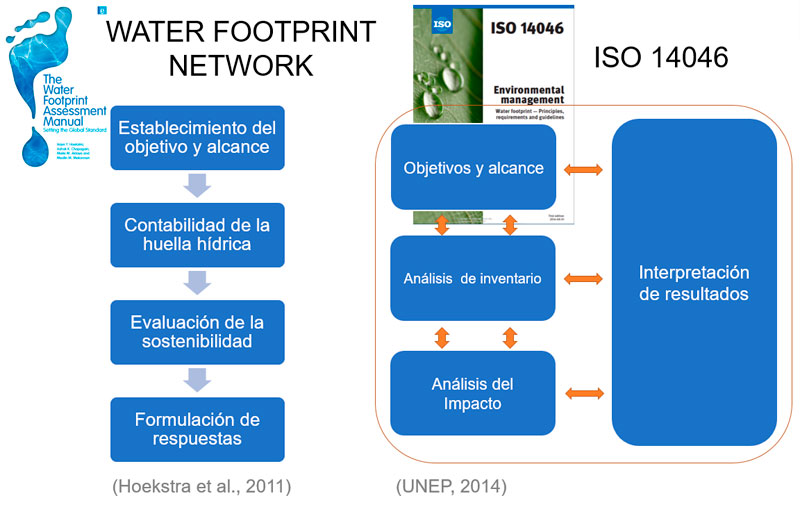
En la siguiente parte del webinar, César comentó las metodologías de la WFN (Water footprint Network) y la norma ISO 14046. Se pudo distinguir la importancia de cada una de ellas, el enfoque de análisis de ciclo de vida que nos presenta la ISO 14046 y la evaluación del uso de agua dulce de la WFN en los contextos de equidad, sostenibilidad y eficiencia.
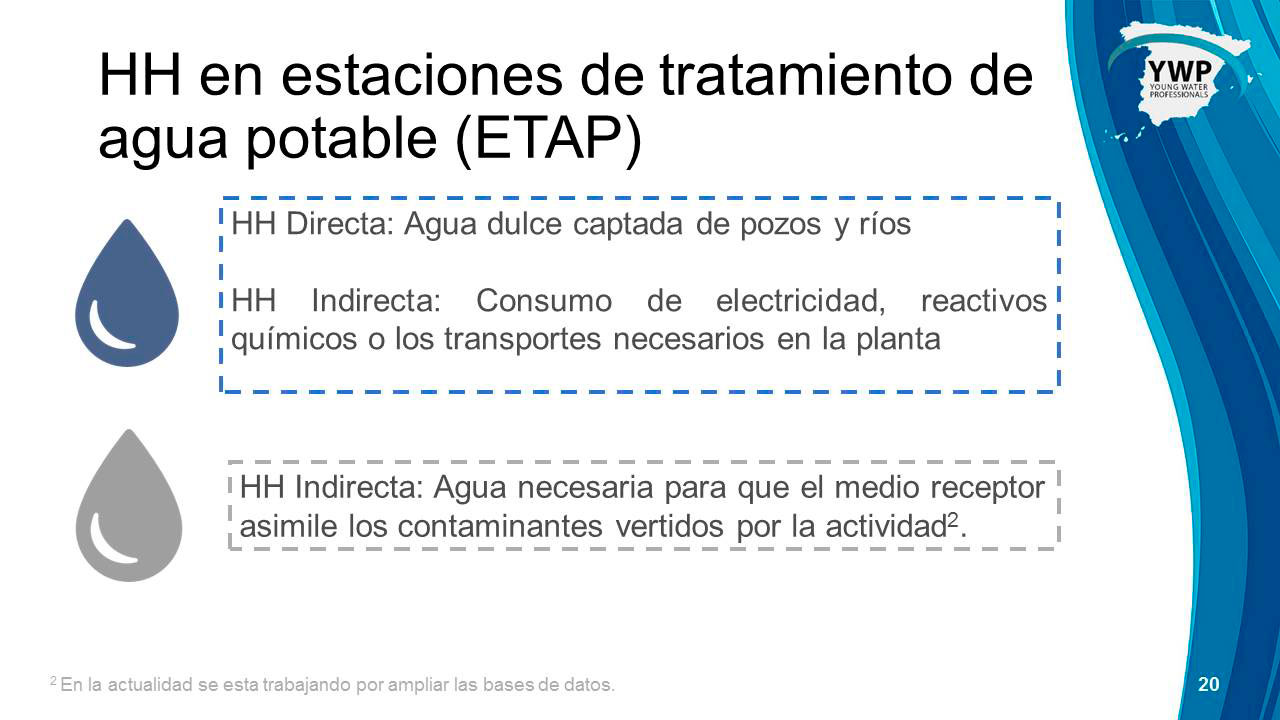
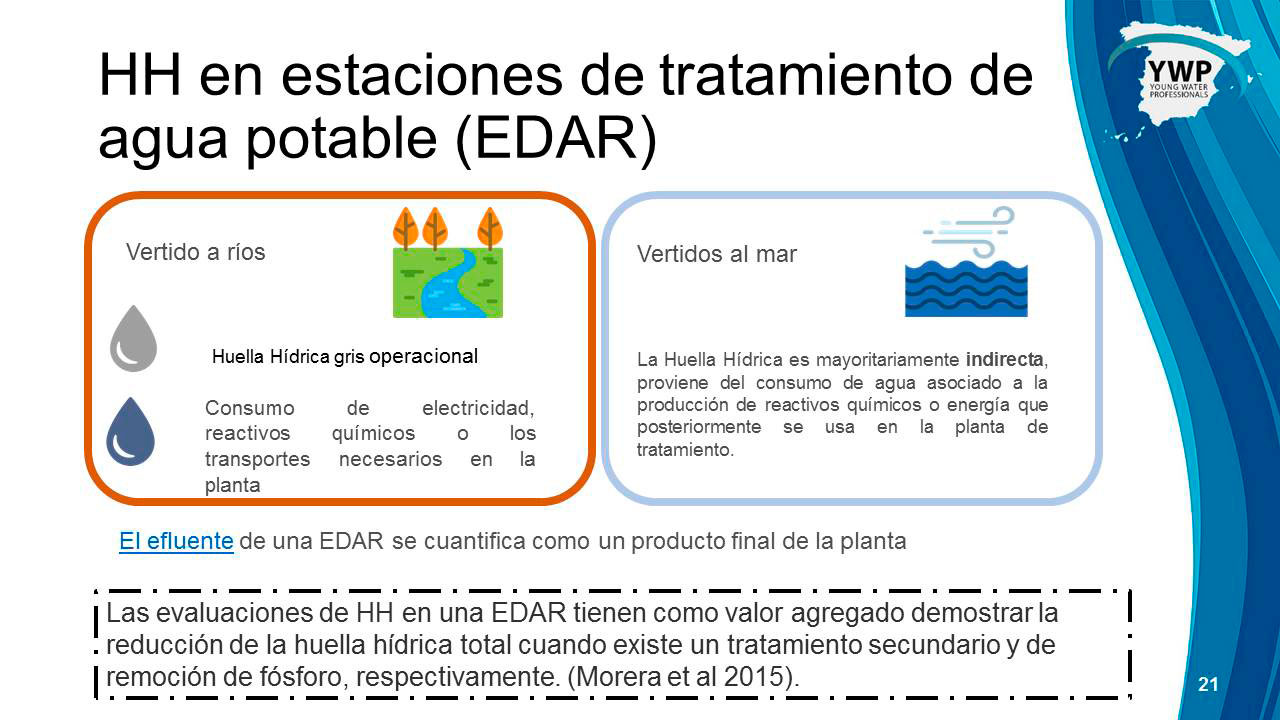
Finalmente, se presentó la aplicación de la HH en Estaciones de tratamientos de agua, entre ellas ETAP y EDAR. Es un concepto relativamente nuevo que trabaja en el cálculo de Huella Hídrica azul y gris. Esta evaluación sirve para detectar puntos críticos en las instalaciones, promover y mejorar los procesos, además de mostrar el balance hídrico de la situación geográfica donde se realiza la evaluación.
Para ilustrar su aplicación, César presentó el caso de una estación depuradora de agua residual (EDAR) y la influencia que puede tener en la industria.
En este caso se evaluó la Huella Hídrica gris y azul, mediante la metodología de la WFN, considerando: zona geográfica, consumos directos e indirectos y estado de los recursos hídricos, entre otros puntos a evaluar.
El estudio confirma que el uso de energía y productos químicos tienen una gran influencia en el cálculo de huella azul. Por otro lado, al realizar la evaluación de huella gris se concluye el beneficio real de una EDAR, ya que al realizar los tratamientos de agua (de acuerdo a su rendimiento y a la legislación vigente) puede reducir la HH gris final de toda la instalación y reducir así el índice de contaminación.
Álex y César comentaron los beneficios reales y retos actuales y futuros de la HH. Entre ellos: La eficiencia en la gestión del agua, la integración de datos, la identificación de puntos críticos y el ahorro energético, y por supuesto las sinergias entre empresa, gobierno y población en beneficio de una gestión sostenible.
Como reflexión final: cuando hablamos de Huella Hídrica no debemos quedarnos en las cifras. Contextualizar esas cifras, conocer qué tipo de agua, cuándo y cómo está siendo consumida/contaminada es lo que realmente marca la diferencia y aporta valor.
Now, we would like to focus the content of the article on the applications of human technology to society and climate monitoring.
The most basic answer to anyone doubting the contribution of satellites to their lives is in their pockets (GPS, Internet, smartphone), and as such, it may be reminded that Europe is building its very own GPS constellation called GALILEO, for which an augmentation service (EGNOS) is available, and its phase v3 development on-going, probably by ADS. GALILEO is a public tool, with Public Regulated Services (PRS) as well as Search And Rescue (SAR) services [14], provided to the European citizens by the European Global navigation Satellite systems Agency (GSA).
Figure 17: SAR service explanation. Source: GSA
There are a few reasons for a big company like Airbus to embark in these endeavors. For once, the projects are financed by European funds, paid via European Commission and European Space Agency, aka by Taxpayers.
The ESA runs in quotas known as Georeturn. Every two years, ministers from all the participating countries in ESA join in a Ministerial Council, to decide for which projects their countries are going to chip in. There are a series of mandatory programmes, and some optional ones. Spain was in difficulties lately, since due to the economic crisis they decided not to comply even with the mandatory parts, which seriously risked the future of the ESAC facilities in the outskirts of Madrid. The decision is even more controversial, considering the 1/1 policy, where if a country provides 1 euro in contribution, is due to receive 1 euro in work. The concept wanted to generate specific know-how in all participating countries, which is partially happening –diversifying the industry, with Spanish companies Deimos or GMV opening sites in Portugal, Poland or Rumania-, but is also leading to a dominance of the most economic powerful countries, like Germany, which controls half of the European ISS budget, and thus the Flight Control Team is located in Munich, and the European Astronaut Center in Cologne.
Part of the reason behind the European institutions supporting space projects, is the possibility of opening the available data to researchers, pumping investigation and future applications of the resulting new technologies, as a societal and market strategy. Many Earth Observation programs (such as Copernicus) have their data completely available online, which can be used for tide control, rescue on sea, atmospheric monitoring, forest and fire control, etc.
Another motivation for Space missions in big companies is the possibility of testing new technologies, as it is happening with Quantum Computing or quantum Communications. One good way of doing this though, cheaper and faster than going on a satellite mission, is using a parabolic flight or a sounding rocket like the TEXUS missions, in order to achieve microgravity and thus study the pure interactions and behaviour of elements, without the additional forces and frictions they stand in Earth. This can help tuning-in the modelling of tools for their industrialization and exploitation.
Figure 16: TEXUS sounding rocket for experiments in microgravity. Source: ADS
One good example for Earth Observation missions, already mentioned, is the European Commision’s Copernicus programme, managed by ESA, of which they say « will provide accurate, timely and easily accessible information to improve the management of the environment, understand and mitigate the effects of climate change and ensure civil security”. This will comprise up to 30 satellites with different instruments, serving scientific applications.
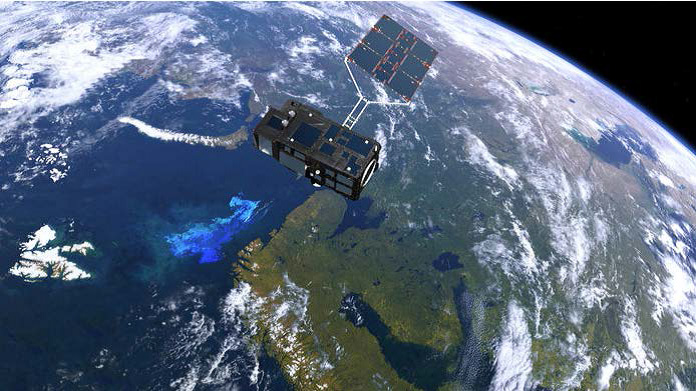
The different missions are named Sentinel, and from those in orbit, three are more related to water phenomena. Sentinel-1 is a polar-orbiting, all-weather, day-and-night radar imaging mission for land and ocean services. Sentinel-1A was launched on 3 April 2014 and Sentinel-1B on 25 April 2016. Both were taken into orbit on a Soyuz rocket from Europe’s Spaceport in French Guiana.
Sentinel-3 is a multi-instrument mission to measure sea-surface topography, sea- and land-surface temperature, ocean colour and land colour with high-end accuracy and reliability. The mission will support ocean forecasting systems, as well as environmental and climate monitoring. Its Ocean and Land Colour Instrument Provide data for a variety of marine biogeochemical products including algal pigment concentration, total suspended matter, coloured dissolved organic matter and Chlorophyll-a, amongst others. Information such as this will, for example, help to improve the prediction of harmful algal blooms. In turn, this will help oceanic food sources to be managed more efficiently. The input of waste products into ocean and coastal waters can also be monitored so that the possibility of accidents and risks of major pollution incidents can be reduced.
Sentinel-6 carries a radar altimeter to measure global sea-surface height, primarily for operational oceanography and for climate studies. Do you have an idea for the next generation of Sentinel satellites?
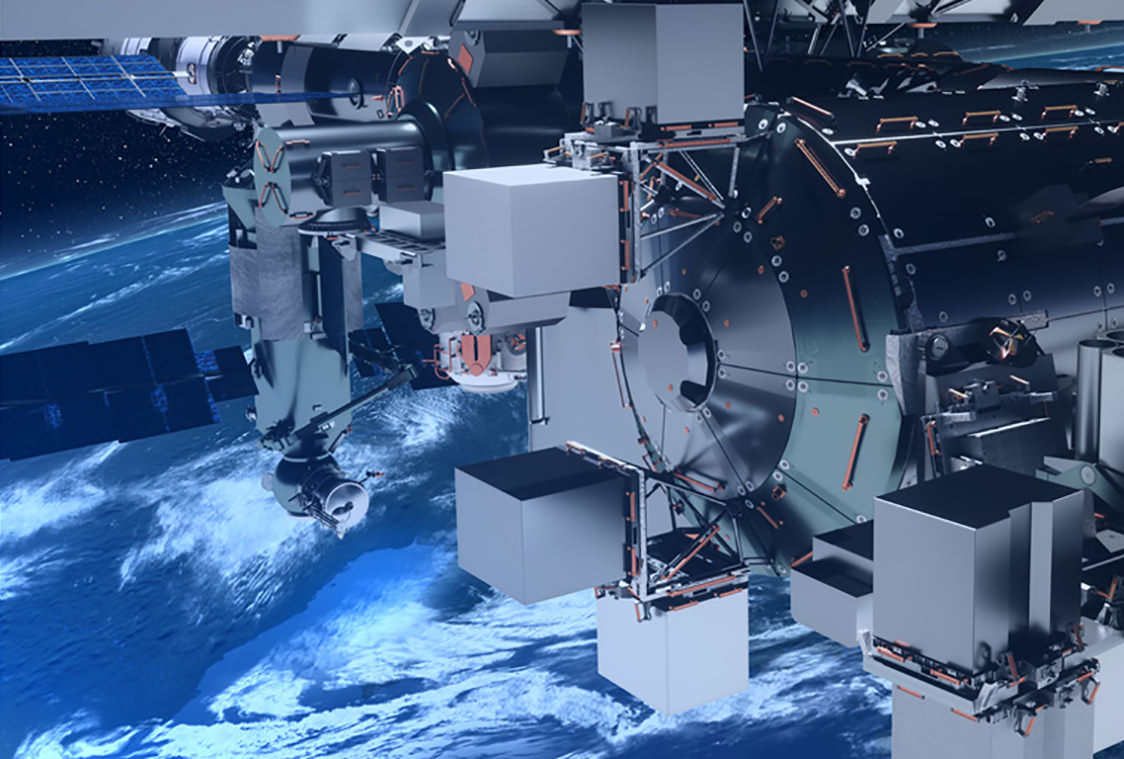
Figure 18: BARTOLOMEO platform outside ISS for experimental research. Source: ADS
Further initiatives are born as an attachment or complement to the existing ones. ADS is finalizing a new external platform to facilitate access to Space to smaller institutions and researchers, honoring ISS’s Nobel prize for Peace as in world collaboration candidature, called BARTOLOMEO; in a similar way tan for instance Nanoracks does in the US privately. The advantage for European Citizens and institutions being again the possibility of using Georeturn thanks to one countries ministry of industry or Space Agency. In this matter, ADS can help making the experiment fly and providing the appropriate context for financing and help. Please visit the Airbus BARTOLOMEO website and contact us either there or directly to the author of this article for this or other collaboration schemes.
Conclusion
Is Space important for us? Yes, cataclysms will come and Earth will die at some point. Thus, we will become extinct if we do not become a multiplanetary species. Does Space technology affect our daily lives? Again, yes. Computers are the result of the Space Race and the development of Silicon technologies. Life has obviously changed and become more comfortable, with a higher quality of life for humanity, thanks to it (even if some people use a device which fits in your pocket and provides you all the knowledge in the world, mostly to send videos of cats, or worse, to give them thumbs up). Many people are not passionate about Space, but you do not need to be to participate in these quests, since everyone’s interest is in stake, as well as potential applications for all fields, as has been discussed in this article. Do you use GPS? Then you may thank space tech for it. Did you enjoy watching the Olympic Games? Again, telecom satellites are your friends. And an infinite number of applications are available nowadays thanks to the development of space technologies.
The future shows a fast changing horizon, but two main challenges lie ahead: quantum physics technology for computing and secure communications, and space exploration. The latter cannot be done without water involvement, and the first will be used to improve our climate control (maybe even generate it and properly control it in electromagnetic fields -Elon Musk dixit- on other planetary bodies), and to monitor our Earthly resources, from which water is our most precious. In this context, collaboration between all science fields is more than welcomed, needed, in order to achieve large challenging endeavors like these ones, which are a defining crossroads for humanity’s future.
For we are water, and it is important to remember who and what we are (made of) before reaching for the stars. Be water my friends.
Context of the article
On November 23th, Diego Pozo, a Spanish space engineer, offered to the Young Water Professionals network a fantastic webinar about “Water in Space”.
In this series of 4 articles Diego explains us the content of his webinar for the people who couldn’t assist and for the not YWP members. Was a great webinar and is a great series of articles, so, in the name of all YWP’s all over the world, thank you Diego!!
From the Panrico Donuts Factory to the stars: Diego Pozo is a space passionate engineer, who left Sevilla in Spain to travel the world specializing in Space Science and Technology thanks to an Erasmus Mundus programme (Spacemaster), to then live or work in up to 9 countries for several Space systems (mostly Telecommunications and GNSS), ISS Operations, Telecom Satellite Operations and recently Space Strategy for future missions for Airbus Defence and Space. He is also a novelist in utero, thus be ready for his first Sci-Fi novel coming soon, based on the Space Colony of Titan: Paralelo.
References
Status of ISS Water Management and Recovery; L. carter, C. brown, N. Orozco, NASA Marshall Space Flight Center, for the American Institute of Aeronautics and Astronautics
Upgrades to the ISS Water Recovery System; M. Pruitt, L. Carter, R. M. Bagdigian and M. J.. Kayatin, NASA Marshall Space Flight Center, for the 45th International Conference on Environmental Systems, 2015
Evolution of water production of 67P/Churyumov–Gerasimenko: an empirical model and a multi-instrument study; various authors; September 2016; Monthly Notices of the Royal Astronomical Society, Volume 462, Issue Suppl_1, 16 November 2016, Pages S491–S506. Link:
But, what is ISS if not a stepping stone towards greater goals? Be it when used as a laboratory to improve our knowledge and the efficiency of our tools on Earth, or as a testbed to launch us safely and prepared to the endless horizon of vast space, ISS is the mean, not the end.
The hashtag #JourneyToMars has an obvious stop on the Moon. The current US President (let’s keep it like that), has recently signed an order to foster new missions to the Moon, which is also an European and Chinese objective (let’s not forget the Chinese Space Station, built and run by China alone, and that the first and only Quantum Physics Communications satellite is Chinese, showing the enormous power of this continuously emerging giant).
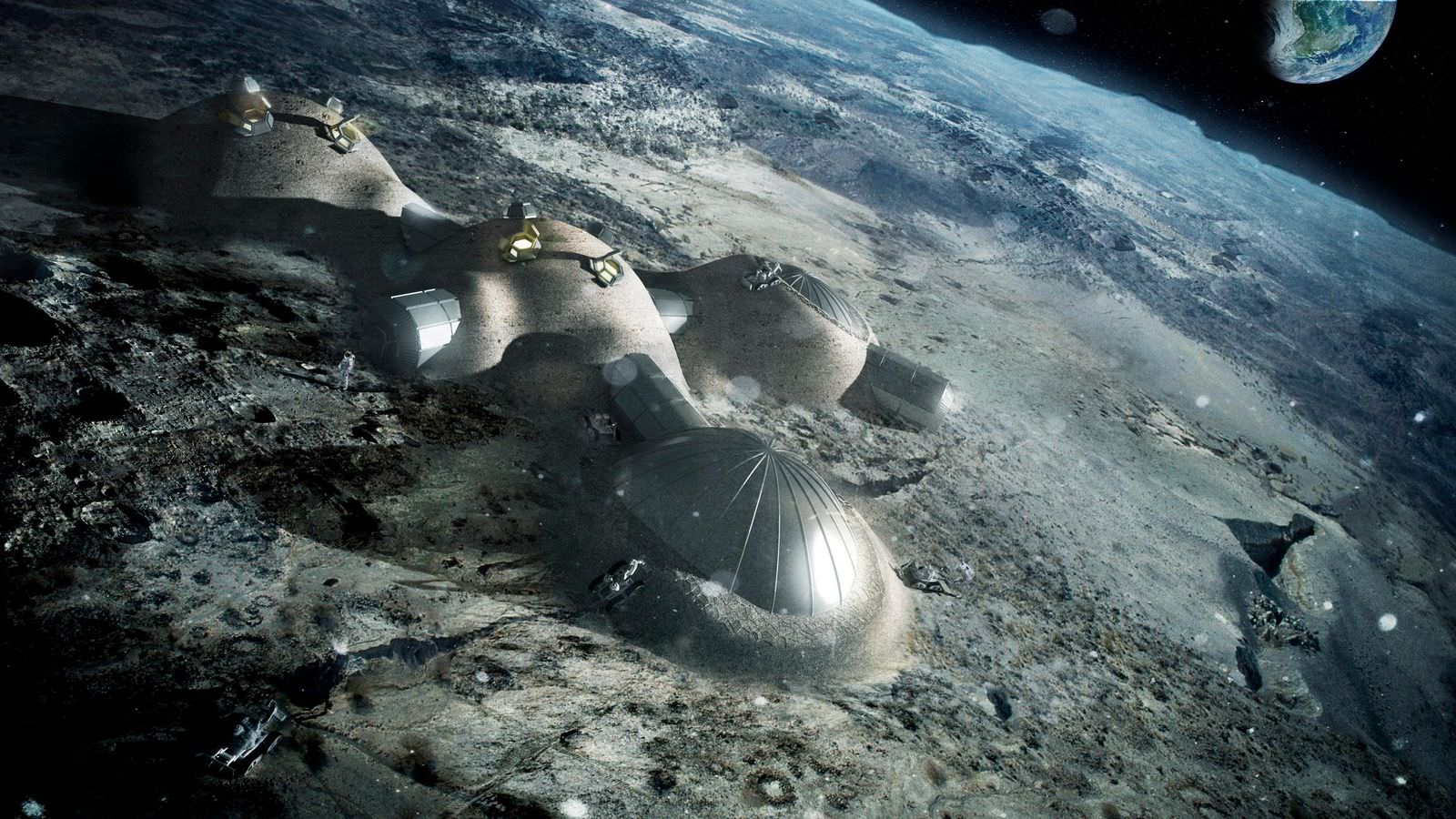
Figure 9: Moon Village vision. Source: ESA
The Moon Village [4] is an European initiative to start a settlement on the Moon, for research and mining purposes (Figure 9).
The Moon village will roughly consist of prefabricated capsules for which robots will gather Moon Dust and 3D print Solar Radiation protection. The WRM from ISS may be improved to provide water for the settlers, as well as other missions are in development on Earth to support the initiative.
As already reported by the press [Tech], two of the very water relation applications include de German DLR led EDEN ISS. Using glasshouse in a closed container that will be shipped to Antarctica in October 2017, it will prove that high plant cultivation can be an everyday reality for future lunar or orbital habitats. Container uses International Standard Payload Racks for the whole cultivation system, opening the door for easy integration with existing space infrastructure. System will also demonstrate a full mass flow for the key technologies, including structure, water, nutrients, thermal and power control.
Figure 10: EDEN ISS research facility in DLR Bremen. Source: DLR
Another of the historical human aspirations is Space Mining. The Moon Village would present an unchallenged opportunity (so far) to do so, and a mission is already being conceived: Luna Resurs or Luna 27.Conceived as a joint Russian-European programme, a planned joint Russian-European lunar lander that is scheduled to be launched in 2023. Most notable European contributions would include European precision navigation system dubbed PILOT and an instrument package PROSPECT that will be capable of drilling up to 2 meters beneath the surface, making it the first, true in-situ prospecting for lunar volatiles – the key to mining water of the moon.
Figure 11: Luna Resurs lander conception. Source : ESAFigure 12: PROSPECT drilling and sampling targets. Source: European Space Agency
One more interesting thing for the reader, could be than she/him could become an Analog Astronaut [5], basically testing systems and equipment in extreme Earth conditions, similar to those found in other celestial bodies.
Many other examples of cooperation and involvement of water for Space Exploration can be found in current on-going and foreseen agencies and private projects.
Satellites as tools for society
When it comes to satellite missions, water has been seeked both for human resourcing and survival in the Solar System and Exoplanets, or to understand the origin of life.
For the first cause, it may be worth looking into the JUICE missions ADS is developing for ESA, to the Icy Moons of Jupiter, Europa, Ganymede and Callisto [6] within the habitable zone, that which would make life as we know it possible on an alien planetary body. The habitable zone is defined by the distance to the planet’s sun and its temperature, so that liquid water could exist on its surface at an acceptable atmospheric pressure [7].
Figure 13: Habitable Zone criteria. Source: WikipediaFigure 14: Comet Churyumov-Gerasimenko as seen by Rosetta. Source: ESA
For the latter type of interstellar water research, which provides clues about the origin of life and of the Universe, a good recent example is the Rosetta mission [8] to comet 67P aka Churyumov-Gerasimenko (catchier? For different tastes, we have the colors).
The Ambition (see the video in Youtoube featuring a Game of Thrones star) endeavor, had incredibly difficult technical problems to solve, including changing its target comet, or hibernating the spacecraft for 31 months [9]. We encourage the reader to learn as much as possible about this notoriously fascinating adventure, but back to our discussion, Rosetta managed to measure the water production rate on the comet during two years [10] thanks to the instrument ROSINA [11][12].
Figure 15: Comer 67P’s water production over two years. Source: Kenneth C. Hansen of the University of Michigan [13]Figure 16: Cycle of water ice at comet 67P. Source: ESA
The combination of all instruments shows an overall increase of the production of water, from a few tens of thousands of kg per day when Rosetta first reached the comet, in August 2014, to almost 100,000,000 kg per day around perihelion, the closest point to the Sun along the comet’s orbit, in August 2015. In addition, ROSINA data show that the peak in water production is followed by a rather steep decrease in the months following perihelion.As for the water cycle, the team studied a set of data taken in September 2014, concentrating on a one square km region on the comet’s neck. At the time, the comet was about 500 million km from the Sun and the neck was one of the most active areas. As the comet rotates, taking just over 12 hours to complete a full revolution, the various regions undergo different illumination.The team found [6] a tell-tale signature of water ice in the spectra of the study region, but only when certain portions were cast in shadow. Conversely, when the Sun was shining on these regions, the ice was gone. This indicates a cyclical behavior of water ice during each comet rotationThe data suggest that water ice on and a few centimetres below the surface ‘sublimates’ when illuminated by sunlight, turning it into gas that then flows away from the comet. Then, as the comet rotates and the same region falls into darkness, the surface rapidly cools again.
Context of the article
On November 23th, Diego Pozo, a Spanish space engineer, offered to the Young Water Professionals network a fantastic webinar about “Water in Space”.
In this series of 4 articles Diego explains us the content of his webinar for the people who couldn’t assist and for the not YWP members. Was a great webinar and is a great series of articles, so, in the name of all YWP’s all over the world, thank you Diego!!
Status of ISS Water Management and Recovery; L. carter, C. brown, N. Orozco, NASA Marshall Space Flight Center, for the American Institute of Aeronautics and Astronautics
Upgrades to the ISS Water Recovery System; M. Pruitt, L. Carter, R. M. Bagdigian and M. J.. Kayatin, NASA Marshall Space Flight Center, for the 45th International Conference on Environmental Systems, 2015
Evolution of water production of 67P/Churyumov–Gerasimenko: an empirical model and a multi-instrument study; various authors; September 2016; Monthly Notices of the Royal Astronomical Society, Volume 462, Issue Suppl_1, 16 November 2016, Pages S491–S506. Link:
Hacer un plato de pasta con el mínimo de agua no es tarea fácil,pero ¡lo hemos conseguido! ¡El Reto de los Espaguetis ya tiene ganadores!
El jurado ha decidido que el premio es para Carolina Cardete, que ha participado a través de Facebook con un genial vídeo haciendo el reto durante la transhumancia.
Aquí puedes verlo al completo:
Carolina se lleva como premio un ejemplar del libro ‘Mi dieta cojea‘ de Aitor Sánchez.
La mención especial ha sido para Águeda García de Durango, por su original receta que incluye anacardos, leche de coco y bebida de soja. Puedes verla en los stories de su Instagram.
Desde YPW Spain queremos agradecer a todos los participantes su implicación en el reto. Estas han sido las participaciones más destacadas:
On November 23th, Diego Pozo, a Spanish space engineer, offered to the Young Water Professionals network a fantastic webinar about “Water in Space”.
In this series of 4 articles Diego explains us the content of his webinar for the people who couldn’t assist and for the not YWP members. Was a great webinar and is a great series of articles, so, in the name of all YWP’s all over the world, thank you Diego!!
One of the main and most obvious needs for Humans in Space, are the hydrating and the toilet needs. Since teleportable vending machines are not in use yet, and sending a gallon of water to Space slightly too expensive, water and waste recycling has always been a must for any Space adventure. In the case of ISS, the solution has been found with Water Recovery and Management (WRM) System, which ensures availability of potable water for crew drinking and hygiene, oxygen generation, urinal flush water, and payloads for operational needs if/as required. The WRS is comprised of the Urine Processor Assembly (UPA) and Water Processor Assembly (WPA). Figure 3 shows a schematic of the system.
Figure 4: WRS on-board the ISS
Waste water [1][2] is collected in the form of crew urine, humidity condensate, and Sabatier product water, and subsequently processed by the Water Recovery System (WRS) to potable water.
The figures 4 and 5 describe the recycling and processing loops for the whole system as well as the hardware and schematics details for both modules. The following synthesis of its functioning has been extracted from the referenced papers [] and []. The waste water bus receives humidity condensate from the Common Cabin Air Assemblies (CCAAs) on ISS, which condenses water vapor and other condensable contaminants and delivers the condensate to the bus via a water separator. In addition, waste water is also received from the Carbon Dioxide Reduction System. This hardware uses Sabatier technology to produce water from carbon dioxide (from the Carbon Dioxide Removal Assembly (CDRA)) and hydrogen (from the electrolysis process in the Oxygen Generation System).
Figure 5: WRM Flowchart [4]Figure 6: WPA (above) / UPA (below) schematics [3]Before starting explaining the schematic, it may be reminded that the ISS consists of the US segment conformed by several modules, the Russian segment, the Japanese laboratory Kibo (with an external facility), and the European module Columbus (Figure 6). Main Command of the ISS (final word if needed), lays in the hands of Houston Mission Control Center (MCC), its FCT and lastly in its Flight Director (FD) (Figure 7).
Figure 7: ISS Configuration. Source: WikipediaFigure 8: Houston MCC positions and center. Source: NASA
WPA
Waste water is typically delivered to the WPA Waste Tank, though the Condensate Tank located in the US Laboratory Module is available in the event the WPA Waste Tank is disconnected from the waste bus. If this is required, the crew must manually connect the Condensate Tank to the waste water bus. Once the WPA Waste Tank is online again, the crew will disconnect the Condensate Tank from the waste water bus. Condensate collected in this scenario must subsequently be offloaded into a Contingency Water Container (CWC). The CWC can then be emptied into the WPA waste tank via a pump, transferred to the Russian Segment for processing by the Russian Condensate Processor (referred to as the SRV-K) or vented overboard (though venting is highly discouraged due to the loss of water consumables and use of propellant required to maneuver the ISS into an acceptable attitude). It must be reminded that the ISS must be kept within a certain attitude window, in order not to interfere with debris, satellites (launch and communications constraints or hinders), and for safety of the station. Weight is costly in space, and thus ADS developed and just put in orbit the first heavy Geostationary Electric Orbit Raising (EOR) satellite: electric propulsion does not use disposable propellant thus cheaper and allowing for more space for Payload needs, at a lower price. On the same price lowering effort, reusable launchers have/are been developed by SpaceX and ADS among other companies in the sector.
Back to our dispose recycling, Crew urine is collected in the Waste & Hygiene Compartment (WHC), which includes a Russian Urinal (referred to as the ACY) integrated for operation in the US Segment. To maintain chemical and microbial control of the urine and hardware, the urine is treated with chemicals and flush water. The pretreated urine is then delivered to the Urine Processor Assembly (UPA) for subsequent processing. The UPA produces urine distillate, which is pumped directly to the WPA Waste Water Tank, where it is combined with the humidity condensate from the cabin and Sabatier product water, and subsequently processed by the WPA.
After the waste water is processed by the WRS, it is delivered to the potable bus. The potable bus is maintained at a pressure of approximately 230 to 280 kPa (19 to 26.5 psig) so that water is available on demand from the various functions. Users of potable water on the bus include the Oxygen Generation System (OGS), the WHC (for flush water), the Potable Water Dispenser (PWD) for crew consumption, and Payloads.
The Waste Water Tank includes a bellows that maintains a pressure of approximately 5.2 – 15.5 kPa (0.75 to 2.25 psig) over the tank cycle, which serves to push water and gas into the Mostly Liquid Separator (MLS). Gas is removed from the wastewater by the MLS (part of the Pump/Separator ORU), and passes through the Separator Filter ORU where odor-causing contaminants are removed from entrained air before returning the air to the cabin. Next, the water is pumped through the Particulate Filter ORU followed by two Multifiltration (MF) Beds where inorganic and non-volatile organic contaminants are removed. Once breakthrough of the first bed is detected, the second bed is relocated into the first bed position, and a new second bed is installed. The Sensor ORU located between the two MF beds helps to determine when the first bed is saturated based on conductivity. Following the MF Beds, the process water stream enters the Catalytic Reactor ORU, where low molecular weight organics not removed by the adsorption process are oxidized in the presence of oxygen, elevated temperature, and a catalyst. A regenerative heat exchanger recovers heat from the catalytic reactor effluent water to make this process more efficient.
Then, the Gas Separator ORU removes excess oxygen and gaseous oxidation by-products from the process water and returns it to the cabin. The Reactor Health Sensor ORU monitors the conductivity of the reactor effluent as an indication of whether the organic load coming into the reactor is within the reactor’s oxidative capacity. Finally, the Ion Exchange Bed ORU removes dissolved products of oxidation and adds iodine for residual microbial control. The water is subsequently stored in the Water Storage Tank prior to delivery to the ISS potable water bus. The Water Delivery ORU contains a pump and small accumulator tank to deliver potable water on demand to users. The WPA is controlled by a firmware controller that provides the command control, excitation, monitoring, and data downlink for WPA sensors and effectors.
UPA
Pretreated urine is delivered to the UPA either from the USOS Waste and Hygiene Compartment (outfitted with a Russian urinal) or via manual transfer from the Russian urine container (called an EDV). In either case, the composition of the pretreated urine is the same, including urine, flush water, and a pretreatment formula containing chromium trioxide and sulfuric acid to control microbial growth and the reaction of urea to ammonia. The urine is temporarily stored in the Wastewater Storage Tank Assembly (WSTA).
When a sufficient quantity of feed has been collected in the WSTA, a process cycle is automatically initiated. The Fluids Control and Pump Assembly (FCPA) is a four-tube peristaltic pump that moves urine from the WSTA into the Distillation Assembly (DA), recycles the concentrated waste from the DA into the Advanced Recycle Filter Tank Assembly (ARFTA) and back to the DA, and pumps product distillate from the DA to the wastewater interface with the WPA. The DA is the heart of the UPA, and consists of a rotating centrifuge where the waste urine stream is evaporated at low pressure. The vapor is compressed and subsequently condensed on the opposite side of the evaporator surface to conserve latent energy. A rotary lobe compressor provides the driving force for the evaporation and compression of water vapor. Waste brine resulting from the distillation process is stored in the ARFTA, which is a bellows tank that can be filled and drained on ISS. The ARFTA has less capacity (approximately 22 L) than the RFTA (41 L), but the capability to fill and drain the ARFTA on ISS avoids the costly resupply penalty associated with launching each RFTA. When the brine is concentrated to the required limit, the ARFTA is emptied into an EDV, a Russian Rodnik tank on the Progress vehicle, or into the water tanks on the ATV vehicle. Next, it is refilled with pretreated urine, which allows the process to repeat. The Pressure Control and Pump Assembly (PCPA) is another four-tube peristaltic pump which provides for the removal of non-condensable gases and water vapor from the DA. Liquid cooling of the pump housing promotes condensation, thus reducing the required volumetric capacity of the peristaltic pump. Gases and condensed water are pumped to the Separator Plumbing Assembly (SPA), which recovers and returns water from the purge gases to the product water stream. A
Firmware Controller Assembly (FCA) provides the command control, excitation, monitoring, and data downlink for UPA sensors and effectors.
The UPA was designed to process a nominal load of 9 kg/day (19.8 lbs/day) of wastewater consisting of urine and flush water. This is the equivalent of a 6-crew load on ISS, though in reality the UPA typically processes only the urine generated in the US Segment. Product water from the UPA has been evaluated on the ground to verify it meets the requirements for conductivity, pH, ammonia, particles, and total organic carbon. The UPA was designed to recover 85% of the water content from the pretreated urine, though issues with urine quality encountered in 2009 have required the recovery to be dropped to 74%. These issues and the effort to return to 85% recovery are addressed in the discussion on UPA Status.
WRM Status
An average estimate of 3340 L of potable water a year is supplied to the potable bus for Crew use and for the OGS. Without such careful recycling 40,000 pounds per year of water from Earth would be required to resupply a minimum of four crewmembers for the life of the station [3]. Animals need to be taken into account too, for both their drinking and their urinating needs. It has been calculated that 72 rats equal one human’s consumption. Nothing should be wasted in order to maximize our options of becoming a multiplanetary species.
Management of the water mass balance has continued to be a challenge due to the need to maintain 1002L of potable water on ISS for crew reserve, limited storage life of potable water in CWC-Is, and the need to minimize the introduction of free gas onto the potable bus.
Free gas is a significant issue in micro-gravity, since it cannot be removed from the water without a gas separator. As mentioned previously, the MRF addresses the free gas issue by using the 0.2 micron filtration to stop free gas during a CWC-I transfer to the WPA product tank. Free gas is vented from the housing by the crew as it accumulates. This procedure reduces crew time required for CWC-I transfer, but not without issue. First, enough free gas accumulates in the MRF housing during the transfer that it became necessary for the crew to still perform a short degassing procedure on each CWC-I prior to a transfer, thus reducing the crew time savings. To degas a CWC-I, the crew spins the CWC-I to coalesce the gas in one location, and then manipulates the bag to move the free gas to the CWC-I outlet port, where it can be vented into the cabin. Second, MRFs were only certified for two months of use, impacting their resupply and availability for use on ISS. A test is currently underway to extend the certified life of the MRF.
For further information on the WRM System, please refer to the references papers from which the explication above has been synthetized. The applications of this technology to deserted areas, or to big infrastructures such as airports, skyscrapers, etc. could make our water and energy utilization much more efficient. It could be an open action, as follow-up of this Webinar, for the YWP to explain when/how has this expertise being reused. NASA/ESA should be able to respond.
Status of ISS Water Management and Recovery; L. carter, C. brown, N. Orozco, NASA Marshall Space Flight Center, for the American Institute of Aeronautics and Astronautics
Upgrades to the ISS Water Recovery System; M. Pruitt, L. Carter, R. M. Bagdigian and M. J.. Kayatin, NASA Marshall Space Flight Center, for the 45th International Conference on Environmental Systems, 2015
Evolution of water production of 67P/Churyumov–Gerasimenko: an empirical model and a multi-instrument study; various authors; September 2016; Monthly Notices of the Royal Astronomical Society, Volume 462, Issue Suppl_1, 16 November 2016, Pages S491–S506. Link:
On November 23th, Diego Pozo, a Spanish space engineer, offered to the Young Water Professionals network a fantastic webinar about “Water in Space”.
In this series of 4 articles Diego explains us the content of his webinar for the people who couldn’t assist and for the not YWP members. Was a great webinar and is a great series of articles, so, in the name of all YWP’s all over the world, thank you Diego!!
WATER UTILIZATION IN SPACE
Water is one of the key elements of human life, and of life as we know it, and as we search for it. The Space endeavor of Mankind has thus needed to privilege the study of water needs as a necessity to reach for the stars, be it in the first expeditions of Gagarin, Tereshkova or Shepard, the Apollo journeys to the Moon, or as an integral part of the MIR and International Space Station (ISS) ventures with the Environmental Control and Life Sustain System (ECLSS). Furthermore, the development of Satellite and Remote Sensing Technology has given humankind the possibility of monitoring vital resources for its existence, and water applications such as ocean, climate and pollution surveillance come as some of the very primary and fundamental applications for the funding governments of the public programs.
There are several reasons for which Water is important for the Space industry. Let’s start with the most basic one: we are humans, thus we need water.
The current Space context is dominated by a Hashtag, as most things in our time, and this is #JouneyToMars. As a former member of the International Space Station operations team, I received a bi-weekly dispatch from NASA on the current state of affairs. Every single email was written around that hashtag: latest developments on the European Service Module (ESM) developed by Airbus Defence and Space (ADS) for the Orion capsule Mission to the Moon and Mars; news on the privatization of the Space and especially the launcher sector to allow SpaceX, BlueOrigin, Orbital ATK or Sierra Nevada Corporation to build their new prototypes to take human to the ISS, the Moon and beyond; plans and experiments performed for Human Colonization of space bodies, etc. Not to forget the commercial endeavors for Space Tourism led by Virgin Galactic, among others. But, what does humanity need to first make it and then be able to sustain life on Mars?
FSL Facility. Source: European Space Agency
We find answers in the first orbits around Earth performed by Russian Cosmonauts in the 60s. It was definitely a trial and error project, including the fly of the very famous dog Laika, Alexey Leonov’s first Spacewalk (nearly fatal due to the stiffness of its spacesuit in vacuum, which he managed to bend with a release valve in extremis to get back into his Soyuz capsule), or several unmanned and proof of concept missions, that we still launch today e.g. LISA Pathfinder for gravitational waves detection, as preparation of the LISA missions. When it comes to Space and human beings, the tests have been performed on ISS, and on human bodies as those of Astronauts and Cosmonauts, as well as of Taikonauts but well, not much data has been shared about those this far.
When you think of the daily routine of an ISS Crew Member, you may think of floating around, gazing at the beauty of our boundary and frontier-less (round) Earth seen from above (its orbital space, to be precise), which is pretty much what they do but in the frame of an 9 hour journey, with the weekend devoted to Voluntary Tasks, Repairs if needed, or just relax and fun (again, floating around like an Ang-Lee film ninja). Their days start with breakfast, followed by a Morning DPC (debrief) by Mission Control in Houston, Moscow, Munich and Tsukuba (followed also by many Payloads -on board experiments- operational centers, and at times related Principal Investigators and Scientists whose experiments they will be manipulating). The day is closed by an evening DPC. Each day, they need to perform at least 2h of exercise to avoid Muscular and Osteo atrophy and alterations. After all, we are not made to be in Space. But that may evolve, as we have done for centuries on the surface or Earth.
The way operations are performed, is through On Board Procedures, sort of instruction manuals, that they must follow step by step, informing the Operators on Ground either via the Voice Loop or via video (if requested), of how far ahead they are on the steps. Taking Europe as an example, the Flight Control Team (FCT) is based in Oberpfaffenhoffen (Munich), with several Payload Operations Facilities in different countries. The experiments are classed as Class 1, 2 or 3. Class 1 takes basic resources (power, water, gases, electricity) from ISS, class 2 are branched to Class 1, and Class 3 are mostly stand-alone, asocial dudes. Water and fluids experiments are so important, that on the European Columbus Module (EC-1), one of the 4 Class 1 Payloads is devoted to if: the Fluid Science Laboratory (FSL), and many other fluid related experiments are connected to other Class 1 facilities, such as the European Drawer Rack (EDR), where the Facility for Adsorption and Surface TEnsion Research (FASTER) experiment found its home.
FSL’s EC. Source: European Space Agency
FSL has a Thermal exchange module, an Experiment Container (EC) module for fluid cells with dedicated video surveillance and ECH20 cooling system, a diagnosis module with halogen lamp, interferometers for Electronic Speckle Pattern, holographic, Wollaston and Schlieren; and a laser unit. An additional module is the Microgravity Vibration Isolator Subsystem (MVIS) to isolate the experiment from residual ISS perturbations.
FSL Interacts with Columbus module, being a Class 1 Payload, with an N2 gas input, the waste as output, and the different connections for the EWACS (Emergency, Warning and Caution System), power, video and data.
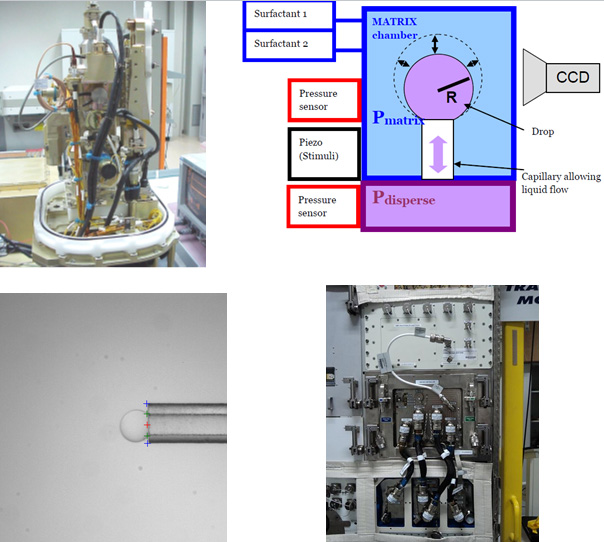
FASTER experiment. Source: Europan Space Agency
But fluidic experiments can not only be performed in FSL. Other facilities provide the means for them. FASTER experiment (Figure 2) was one of the most complicated ones I’ve dealt with, due to the need for real-time following of the mixture of two liquids on ground by the operations and the scientific team. The reason being, a bad mixture or equipment reaction could endanger the whole facility, and bring an end to the experiment. And you cannot just order new supplies on Amazon (yet) when you are out there (not up or down there). It must be borne in mind that the Space one is very conservative industry, where if something works fine you just do not change it: we still use the Soyuz capsule Gagarin used, the Proton rocket from the Space Race, and Columbus recorded on Tape until 2012, just to mention a few. That is partly why, we ensure and reassure that water and human survival will not be a problem on ISS, the Moon, Mars or anywhere.
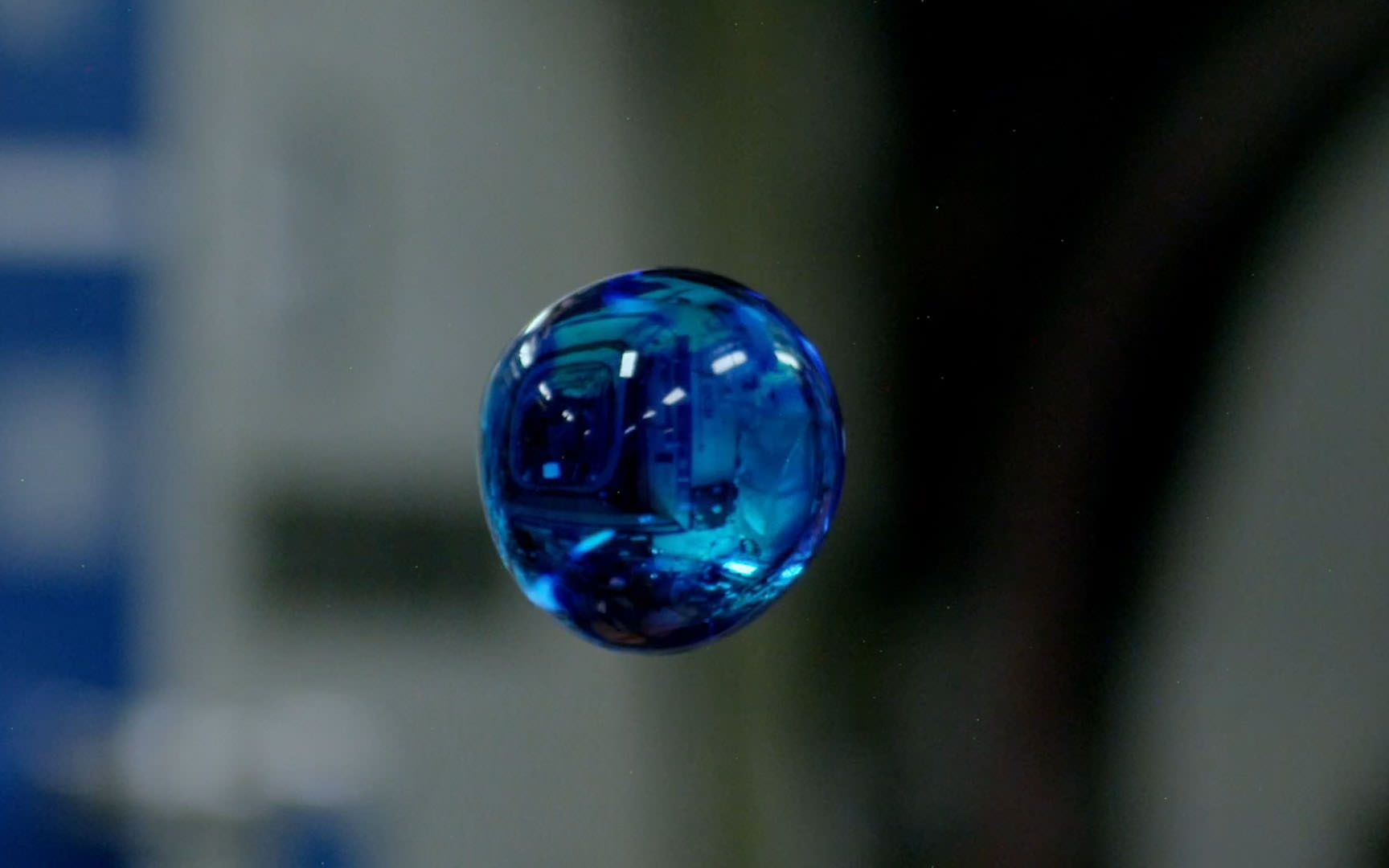
Contained in the EDR Class 1 Payload, the experiment in itself had as purpose, for several liquid samples, to study the links between the physical chemistry of the droplets interface, the liquid films and the collective properties of an emulsion in the absence of gravity. As for its operational concept, a drop of liquid is created in a matrix chamber made of another liquid (non- miscible with the drop) and stimulated with different kinds of stimuli (pressure variation) by means of an actuator, which can be in turn the active compensation piston or the Piezoelectric transducer. The difference of pressure across the drop interface is calculated from the pressures sensors readings acquired in the two chambers. In addition a camera is acquiring the profile of the drop. The experiment had to be repeated at several fluids temperatures (the maximum temperature range is 10-40°C) and at several surfactants concentrations (by mean of the surfactant injection). Eventually two magnification ratios were available.
There were companies behind FASTER, to improve their understanding and modelling of the forces that result from liquid interaction, in order to update their processes and production accordingly.
Status of ISS Water Management and Recovery; L. carter, C. brown, N. Orozco, NASA Marshall Space Flight Center, for the American Institute of Aeronautics and Astronautics
Upgrades to the ISS Water Recovery System; M. Pruitt, L. Carter, R. M. Bagdigian and M. J.. Kayatin, NASA Marshall Space Flight Center, for the 45th International Conference on Environmental Systems, 2015
Evolution of water production of 67P/Churyumov–Gerasimenko: an empirical model and a multi-instrument study; various authors; September 2016; Monthly Notices of the Royal Astronomical Society, Volume 462, Issue Suppl_1, 16 November 2016, Pages S491–S506. Link:
El relevo generacional en los equipos técnicos y puestos de responsabilidad de las instituciones que constituyen el sector del agua en favor de las nuevas generaciones es una de las claves para asegurar la sostenibilidad de estos servicios en el futuro próximo. Este factor, aun siendo fundamental, se suele situar en un segundo plano en relación a otros temas sectoriales que suelen acaparar más atención mediática.
Los jóvenes profesionales del sector deben estar preparados: en un futuro no muy lejano este colectivo será el encargado de tomar decisiones y guiar la evolución de estos servicios. Para ello es necesario que las nuevas generaciones tengan acceso a estas entidades, para que a partir de ahí, puedan desarrollar sus capacidades y aptitudes.
Para que se pueda dar ese relevo inevitable, es necesario que el ámbito laboral en el que este colectivo desempeña su actividad sea propicio. Sin embargo, no existe actualmente información sobre las características generales del ambiente de trabajo en el que se desenvuelven los jóvenes profesionales.
Con el objetivo de proporcionar información sobre este tema, así como diagnosticar sus fortalezas, debilidades y posibilidades de mejora, desde el colectivo Young Water Professionals de España hemos creado una encuesta de libre acceso. A partir de un cuestionario sencillo – 5 minutos de duración aproximada –, se pretende obtener una visión global sobre el estado de este asunto. Determinar qué cosas son importantes en relación a nuestros puestos de trabajo y cómo vemos el futuro del sector. Las cuestiones se dividen entre valoraciones sobre la situación laboral, la especialización del encuestado/a y sus perspectivas de futuro.
Teniendo en cuenta las diferencias que hay entre el mundo empresarial y el ámbito académico, se han creado dos cuestionarios específicos que son los siguientes:
Si eres menor de 35 años y trabajas en el sector del agua o tienes interés en desarrollar tu carrera profesional en él, te animamos a participar de manera responsable en esta iniciativa. Esperamos obtener resultados que puedan ser difundidos a través de las plataformas digitales más importantes del sector.
La red YWP-Spain es el capítulo español de la red de jóvenes profesionales involucrados en el sector del agua de la International Water Association, IWA, y que nace bajo el amparo de la Asociación Española de Abastecimientos de Agua y Saneamiento, AEAS.
El objetivo del grupo es contribuir al presente y futuro del sector del agua en España a través del desarrollo profesional, reconocimiento y visibilidad de nuestros YWP. Persiguiendo la mejora de las competencias de los integrantes de la red YWP y la creación de sinergias entre los diferentes sectores y disciplinas tanto a nivel nacional como internacional.
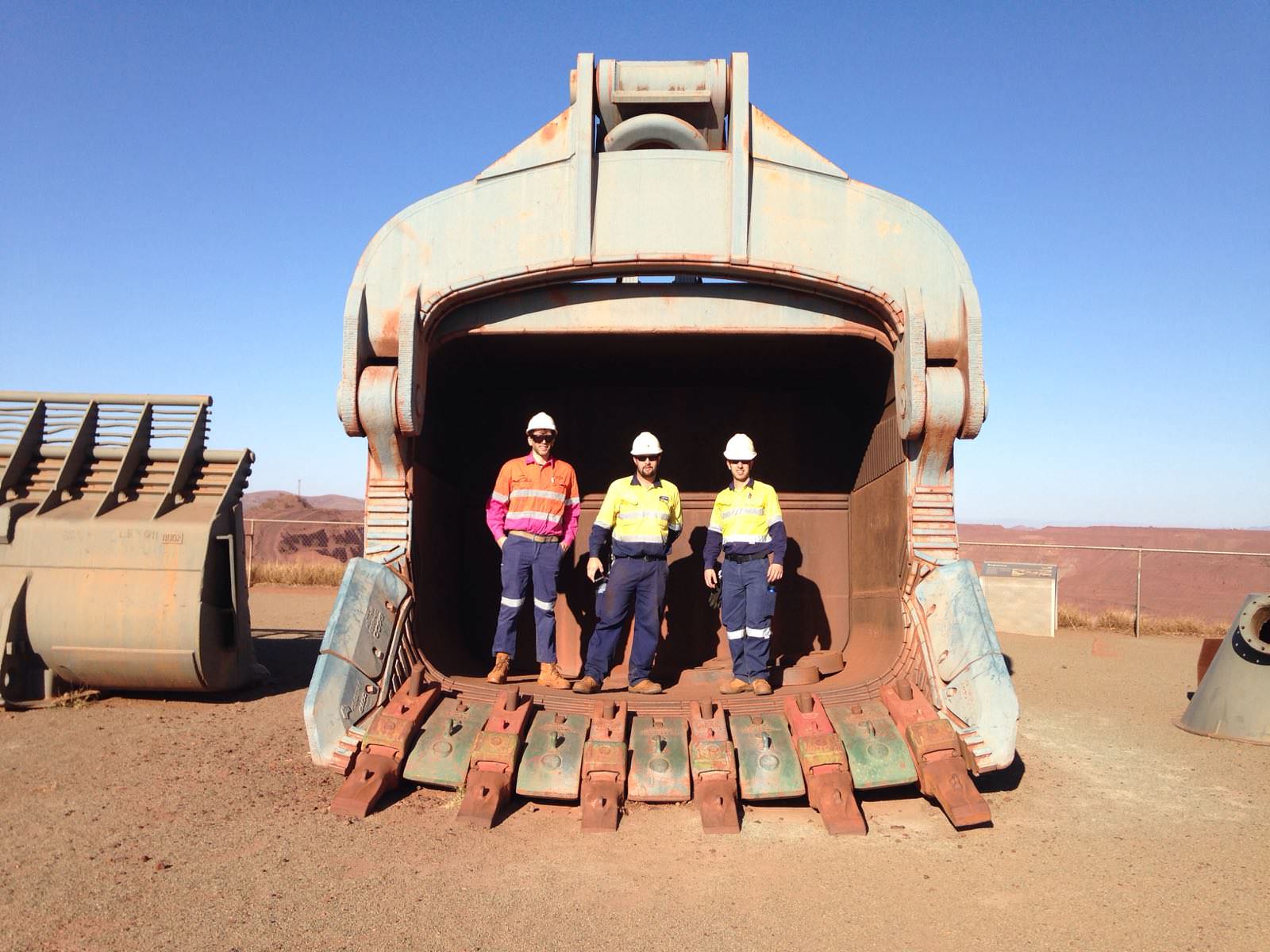
Después de estar trabajando en Israel, viviendo en la bulliciosa aglomeración urbana de Tel Aviv, mudarse al desierto australiano, más conocido como el “Outback”, requiere de un ligero proceso de adaptación. Ya cuando te montas en el avión que hace el trayecto Perth-Newman, y observas a tus acompañantes, la gran mayoría mineros uniformados con trajes de seguridad de colores llamativos, empiezas a sospechar que no vas precisamente a un lugar muy turístico. Poco después lo puedes confirmar al bajarte del avión, cuando eres recibido por una plaga de moscas que no te dejan vivir y unos agradables 45ºC a la sombra.
Newman es un pequeño pueblo minero hogar de la mayor mina a cielo abierto de hierro del mundo; Mount Whaleback. Se encuentra en el corazón de la Pilbara, una vasta y desolada región del estado australiano de Western Australia. Esta es conocida por sus abundantes recursos minerales, que son el negocio de las grandes empresas mineras en numerosas explotaciones repartidas por toda el territorio. Para dar una idea de la importancia de la minería en Western Australia, esta contribuye aproximadamente al 37% de su economía. Y en este contexto, una empresa española, Valoriza Water Australia (Grupo Sacyr), estaba construyendo una planta desalobradora para abastecer al pueblo de Newman y a la industria minera.
Para mí que venía de trabajar en la planta desaladora de Ashdod en Israel, un gigante de 384.000 m3/día, la planta de Newman, de 16.500 m3/día, parecía en un principio casi un juguete, pero nada más lejos de la realidad. Nuestro cliente, la minera BHP Billiton, no se puede definir precisamente como sencillo y cómodo. Una de las cosas que llama la atención de trabajar en Australia es lo rigurosos y metódicos que son, especialmente en materia de seguridad. No se podía dar medio paso en planta sin tener el debido procedimiento revisado y firmado (esto es menos exageración de lo que parece). A las 6 de la mañana todos los días reunión de seguridad, control de alcoholemia, y si tenías suerte de drogas. Cualquier cosa que se saliese un poco de lo rutinario, aunque insignificante a nuestro juicio, era motivo de investigación. Trabajar con este este nivel de exigencia y supervisión no es fácil, no obstante, al menos técnicamente, termina siendo positivo y dando sus frutos para el proyecto.
La planta toma el agua de una serie de pozos del entorno de Newman, todos ellos con una salinidad elevada (TDS 500 – 2.000 mg/l), motivo por el cual uno de los elementos clave del proceso son los bastidores de ósmosis inversa. Yo, en calidad de ingeniero de proceso, estuve involucrado en las fases de pre-comisionado, comisionado y puesta en marcha de la instalación, desde antes de meter la primera gota de agua bruta en planta, hasta que esta arrancaba y paraba sus líneas de producción automáticamente en base a la demanda de los tanques de agua potable de nuestro cliente. Una de los hitos que más nos costó fue conectarnos a los mencionados tanques (y por tanto abastecer a consumo), ya que antes durante todo el periodo de comisionado el agua que salía de planta era enviada a rechazo o vertido de agua residual, el cual bajo ciertas restricciones se aprovechaba para usos de agua no potable en la mina.
Fuera de la planta, la vida en el desierto australiano es peculiar. La sensación de estar completamente aislado no te abandona nunca. La Pilbara es una región del tamaño de España, pero solo con una población de 44.000 habitantes (0,09 hab/km2), y la ciudad más cercana, Perth, está a 1200 km. Y no nos vamos a engañar, no hay mucho que hacer. De hecho la mayoría de los trabajadores australianos son FIFO, abreviatura de Fly-in Fly-out, lo cual quiere decir que vuelan a Newman para trabajar 14 días seguidos y se vuelven a su casa 7 días a descansar. Llama mucho la atención que un pueblo de unos 3.000 habitantes tenga más tráfico aéreo que muchos aeropuertos de ciudades españolas, con unos 12 vuelos diarios de aviones comerciales.
Pero vivir en el desierto también tiene su encanto. Esos paisajes vastos e inexplorados, los cielos del desierto inigualables, la naturaleza en todo su explendor; es habitual cruzarse con canguros allá por donde vayas, o encontrar lagartos de gran tamaño merodeando por la planta, aunque claro también están las arañas y serpientes, algunas de ellas mortales (hay que mirar dos veces donde se sienta uno). También me llevo un buen recuerdo de las innumerables barbacoas con los compañeros (elemento principal de ocio sin duda), así como del buen ambiente que se respiraba en la planta, con trabajadores de todos los rincones del mundo; australianos, europeos, filipinos, indios, chinos, etc.
Tras la finalización del Reliability Test, prueba de rendimiento donde produjimos agua potable durante un mes en calidad y cantidad suficiente, terminamos nuestro trabajo en Newman, y después de un año viviendo allí me trasladé a Perth. Echando la vista atrás ha sido una aventura que me ha enseñado cuatro cosas y me ha proporcionado unas buenas anécdotas que contar.